Home → Identify → First purchase
Buying Your First Crystal? Don't Fall for the "Perfect" Trap
Edison Cheng
Diploma in Crystal Identification, Gemmological Institute, China University of Geosciences
Published 6 September 2026
A beginner collector came to see me recently. She was very excited. She wanted to show me her first crystal bracelet. She bought it online. The price was quite low. The seller called it a high-grade yellow citrine. Every bead looked completely clear. There were no flaws. No cracks. The color was very bright.
She asked for my thoughts.
I had to tell her the truth. It was still quartz. But it was not a natural citrine. It was likely a low-grade purple amethyst. A factory heated it up in an oven to change the color.
This happens a lot in the gem market. It is a sad reality.
New buyers get confused easily. Marketing buzzwords are everywhere. Cheap price tags are tempting. You do not need to be an expert to avoid these traps. You just need a few basic rules about how gems are sold.
1. Nature Is Rarely Perfect
Many beginners make the same mistake. They look for perfectly clear stones at a low cost. We often think "perfect" means high quality. But in the crystal world, it is different. Total perfection is often a sign of factory manufacturing.
Natural crystals grow deep underground. It takes millions of years. The conditions down there are very unstable. Because of this, crystals trap other minerals inside. They trap tiny fluids. They form internal stress lines. In the jewelry trade, we call these inclusions. They look like tiny clouds or feathers.
These internal marks are normal. They are the characteristics of real, earth-mined gems.
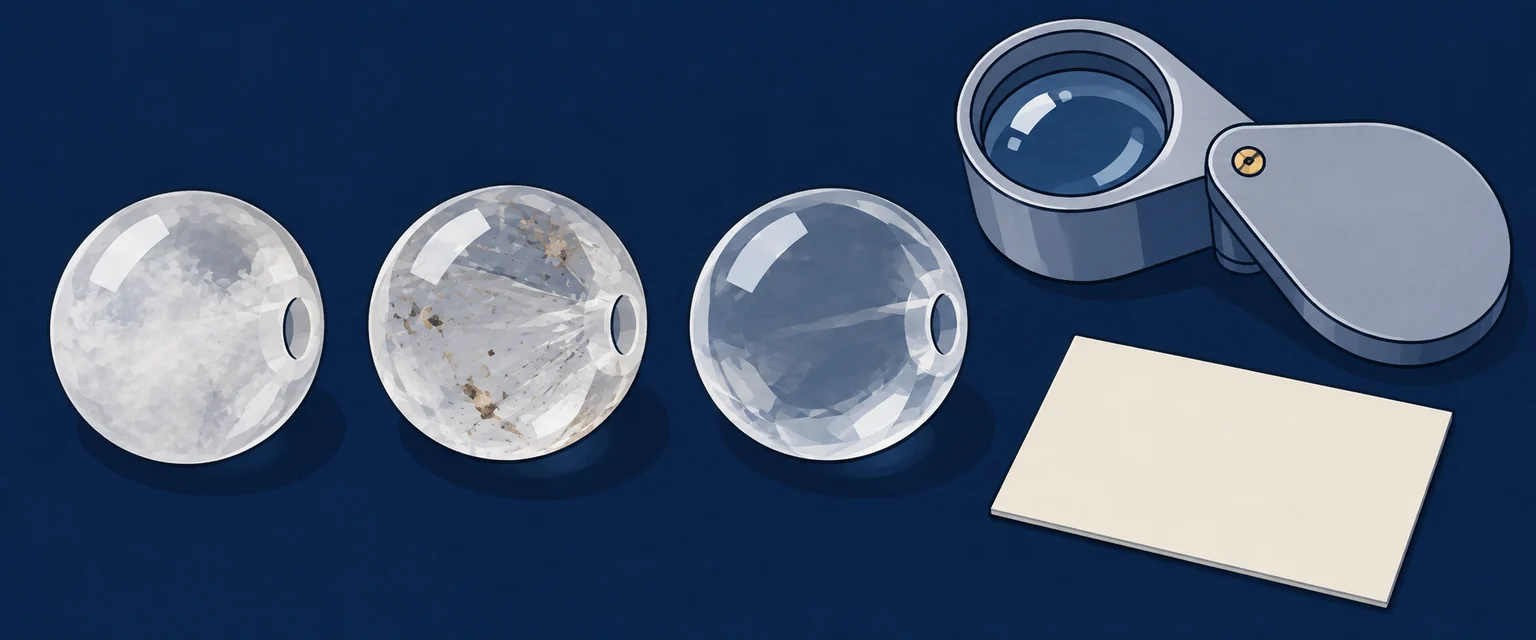
- Notice the differences
- Clouds, inclusions and clarity are starting points for observation.
- Clarity is not a verdict
- These three appearances alone cannot establish material, origin or treatment.
So, be careful with cheap bracelets. If a bead looks as clear as water, think twice. If it has zero internal marks and intense color, ask questions. Flawless natural crystals do exist. But they are rare. They cost a lot of money.
2. Learn the Market Tricks
Artificial color is another trap for beginners. As we saw with the citrine example, heat treatment is a massive business today.
Natural yellow citrine is actually quite scarce. It usually has a very pale color. It looks smoky or lemony. Because it is rare, factories take common purple amethyst and heat it to high temperatures. The heat changes the iron inside the stone. The color turns into a dark, burnt orange-yellow.
The industry calls this "heat-treated citrine." It is still quartz. But some sellers hide the treatment. They do this to charge you a higher price.
Watch out for other wild colors too. If you see neon pink, electric blue, or intense green beads, be suspicious. They are usually dyed. Sellers sometimes inject them with colored plastic glue. For your first purchase, choose softer colors. Muted, organic tones are often a safer bet.
| The trap | What the seller says | What it usually is | What the article tells a beginner |
|---|---|---|---|
| Flawless beads at a low price | "High-grade", every bead completely clear, no cracks | Total perfection is often a sign of factory manufacturing | Natural crystals trap inclusions: tiny clouds, feathers, stress lines. Flawless natural crystals exist but are rare and cost a lot. If it is flawless and cheap, ask questions |
| Bright "citrine" at a low price | "Natural citrine" | Usually common purple amethyst heated to high temperatures. It is still quartz | Natural yellow citrine is scarce. Some sellers hide the treatment to charge a higher price. Ask whether it was heated. Colour alone will not tell you |
| Neon pink, electric blue, intense green | "Rare colour" | Usually plastic or glass, dyed or injected with colored glue | Be suspicious. For a first purchase, choose softer, muted, organic tones |
3. A Smart Place for Beginners to Start
You do not need to spend a fortune on your first piece. You do not need to look for rare, exotic minerals. A better strategy is to start with quartz varieties that are easy to find globally.
Go for clear quartz, smoky quartz, or standard purple amethyst. These minerals have huge natural reserves all over the world. Therefore, the raw material cost stays very low.
A low cost does not mean zero risk of fakes. It just means that genuine, natural options are highly accessible. They are very budget-friendly for beginners.
Choosing these common stones lets you enjoy real earth history. You can start your hobby without risking your hard-earned savings.
Trusted Consumer Guides for Buyers
Want to learn more about standard gemstone descriptions? You can consult these public consumer resources:
- GIA (Gemological Institute of America) – Gem Encyclopedia: Quartz Quality Factors
- AGTA (American Gem Trade Association) – Consumer Guide to Common Gem Treatments