Home → Stories → My Crystal Mystery Box Was Genuine but It Was Not the Bargain I Expected
My Crystal Mystery Box Was Genuine but It Was Not the Bargain I Expected
Mr. Chen
Published
English edition of the original Chinese article.
At about two-thirty in the morning, I became “the luckiest person in the livestream.”
The host opened the crystal mystery box I had chosen, gasped, and held the beads close to the camera. As the light moved, golden strands lit up inside the transparent crystals.
“This isn't ordinary rutilated quartz. It's collector-grade titanium quartz. Prosperity, career luck, and real value at this quality.”
Congratulations flooded the chat. Someone said I had won the grand prize for the price of a normal box. Others asked whether I would sell it. The host began counting down: only two boxes from the batch remained.
Caught up in the excitement, I bought both.
After the stream ended, I realized I had spent almost a week's living expenses.
The golden glow disappeared when it arrived
The package came a few days later. I waited until evening and switched on my desk lamp, hoping to recreate the glow I had seen on-screen.
The beads looked much darker. There were golden strands inside, but also several obvious cloudy areas. One bead was slightly chipped around its drill hole.
I sent photos to customer service. They said natural quartz had fractures and mineral imperfections, and professional livestream lighting would naturally look different on a phone.
When I asked about value, they replied, “Titanium quartz prices depend on the market and finding the right buyer. You've already received a high-grade piece.”
The box included a report identifying natural quartz. I scanned the verification code. The report existed and described natural quartz with rutile inclusions.
That reassured me halfway.
The other half noticed that the report said nothing about “top grade,” “collector grade,” or the value claimed in the stream.
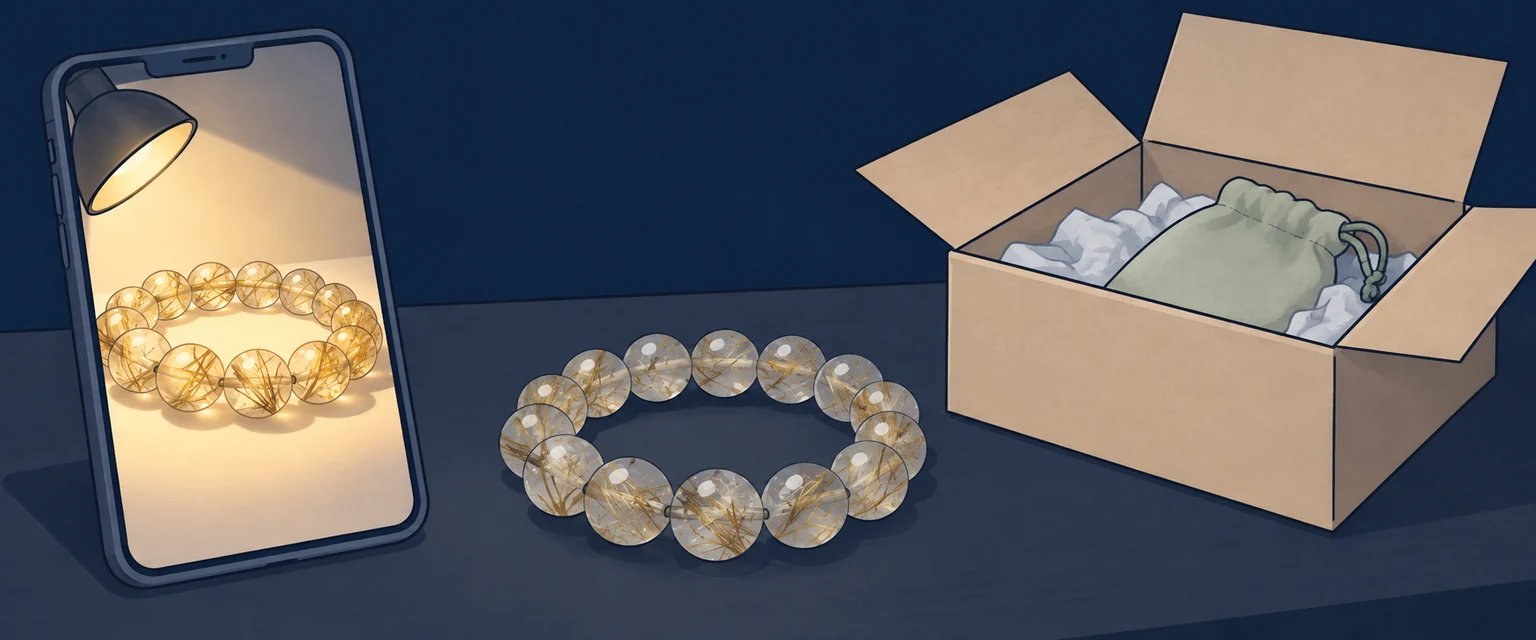
- Different viewing conditions
- Presentation lighting and ordinary surroundings can create different impressions. Assess the actual item, specifications and sale terms.
The report was genuine so why was resale so difficult
A few weeks later, I needed money. Remembering the host's claim that the bracelet held its value, I asked a nearby jewelry store about selling it on consignment.
The staff member examined it under a light for a long time.
“When you bought this, did anyone explain that the report identifies the material?” she asked.
She explained that an examination can address whether a piece is quartz, what its inclusions may be, and some treatments. A report generally does not assign a quality grade or guarantee a selling price.
Value also involves clarity, the thickness and distribution of rutile, fractures, polish, dimensions, weight, and demand. Mine was genuine natural rutilated quartz, but not exceptionally rare collector material.
The shop would consider consignment, at a suggested price below half of what I had paid. Two other crystal shops gave similar opinions.
That was when I understood what had happened. Nobody had sold plastic or glass as quartz. The stream had turned “natural” into “rare,” then “rare” into “holds its value.”
It was not fake but it was not a bargain
I watched the stream again and noticed how carefully the host spoke.
“Great collector potential.” “These sell for much more elsewhere.” “People who know, know its value.”
There was no promise to buy it back, no comparable weight or quality information, and no independent valuation to check.
I contacted the platform about a return. The conversation was calm. In the end, I could return only the two unopened boxes. The bracelet I had worn could not be returned.
I did not throw it away. It was natural quartz, and it was attractive. It simply did not shine the way it had under the camera lights, and it was not as valuable as the chat had made it sound.
It now sits on my desk. It does not remind me to attract wealth. It reminds me to ask better questions before an expensive crystal purchase: what treatments it has received, what supports the quality claims, what the return terms are, and who has actually assessed the supposed market value.
I still watch crystal livestreams sometimes.
But when the countdown starts, I no longer rush to pay. I write down the product name and details. If I still want it after daylight, I look up what it actually is.
Because I did not buy only a crystal that night.
I bought a ten-second countdown, a screen full of congratulations, and a moment in which there was no time to think.