Home → Insights → Hardness and water
The Myth of Mohs Hardness: Why Your "Safe" Crystals Are Still Ruining in Water
Edison Cheng
Diploma in Crystal Identification, Gemmological Institute, China University of Geosciences
Published 5 September 2026
If you spend any time on crystal forums or Reddit threads, you’ve probably run into the standard rule of thumb. It usually goes like this: "If a stone has a Mohs hardness of 6 or higher, it’s completely safe to cleanse in water."
It sounds scientific enough. It makes life easy for collectors who love water rituals.
But as a gemologist who looks at damaged jewelry every day, I can tell you that this rule is flat-out wrong. It is a massive misconception that completely confuses two entirely different concepts in physics and chemistry.
You can respect the spiritual side of your crystal collection without accidentally destroying it. Most minerals are incredibly stable. They don't need to be constantly washed, scrubbed, or soaked. In fact, blindly following the "hardness 6" rule is one of the fastest ways to ruin your favorite pieces. Let’s look at why this happens on a structural level.
Hardness Is Not Waterproofing
To understand why this myth is dangerous, we need to clarify what "hardness" actually means in the gem industry. When gemologists talk about the Mohs scale, we are talking about one specific property: a mineral’s resistance to being scratched.
For example, a quartz crystal has a hardness of 7. A piece of feldspar has a hardness of 6. This means quartz can scratch feldspar because its atomic bonds are tougher under friction. That’s it.
Mohs hardness does not tell you if a mineral is chemically stable. It doesn't tell you if it will rust, dissolve, absorb oils, or crack under pressure.
Think of it like a high-grade tactical vest. The vest might be completely knife-proof and bullet-resistant. But if you jump into a swimming pool wearing it, that vest is still going to get soaked. If you leave it in a damp closet, it will still grow mold and rot. Physical toughness and chemical stability are two completely separate things.
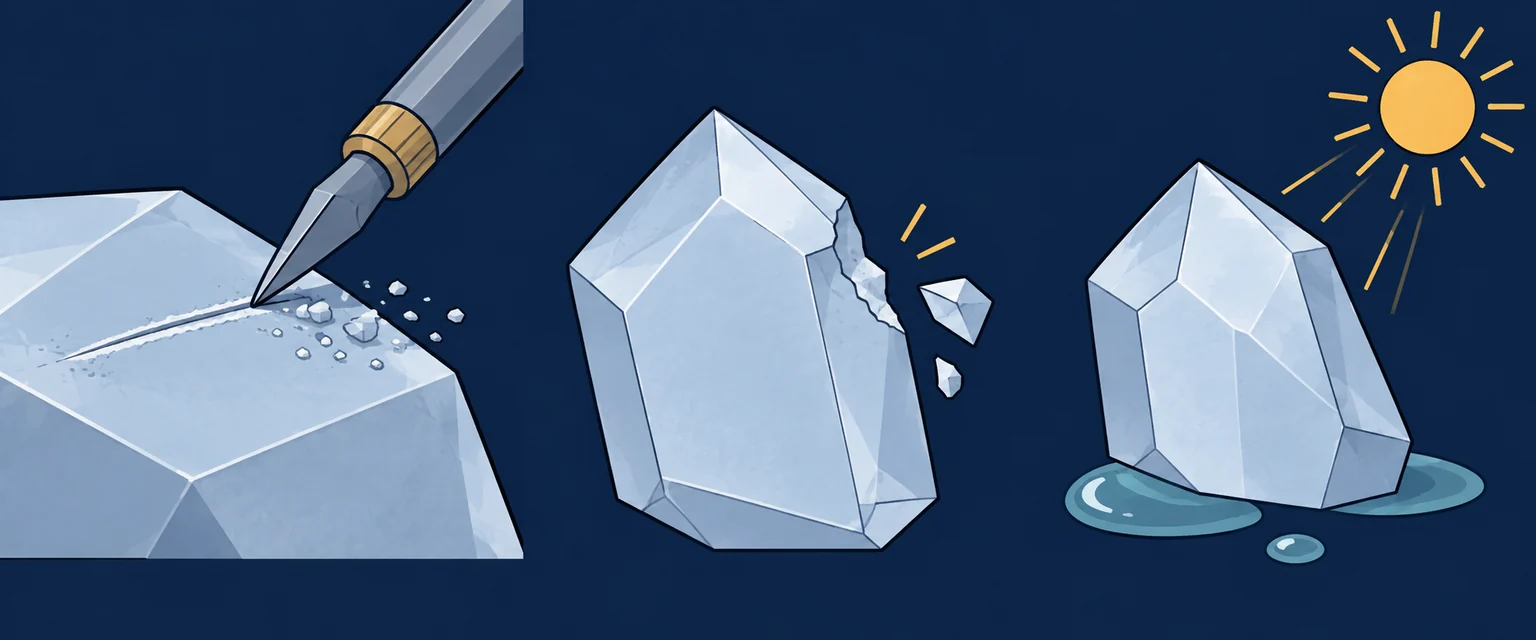
- Scratching
- Hardness describes resistance to scratching.
- Impact
- Hardness alone does not predict chipping from impact.
- Environment
- Water, chemicals, light and heat require material-specific care.
Three "Hardness 6" Stones That Are Destined to Fail in Water
We see the aftermath of the water-cleansing trend in the lab all the time. Here are three incredibly popular gemstones that have a safe hardness rating on paper, but get absolutely wrecked by regular water exposure.
1. Pyrite (Hardness: 6–6.5)
Pyrite is a classic example. It looks like heavy, metallic gold, and it feels indestructible. People love using water to clear its energy.
But look at the chemistry. Pyrite is iron disulfide (FeS₂). It’s an iron compound. When you submerge pyrite in water, the liquid traps oxygen against the metal. This triggers a harsh chemical reaction known in museums as "pyrite disease."
The mineral literally begins to oxidize. It sprouts deep, dark orange and brown rust spots along the crystalline faces. What was once a beautiful, gleaming metallic specimen turns into a dull, corroded chunk of iron. Water doesn't refresh pyrite; it ruins it.
2. Labradorite and Amazonite (Hardness: 6–6.5)
These belong to the feldspar family, and they are staples in beaded bracelets. They seem tough enough for a quick rinse.
The problem here isn't chemical; it's structural. Feldspars have a property called "perfect cleavage." This means the atoms inside the crystal are arranged so that they split apart very easily along flat planes.
When you wash a beaded bracelet, water gets trapped inside the drill holes. There is no airflow inside a tiny bead channel, so that water sits there for days. Through capillary action, the water pushes into the microscopic cleavage cracks of the stone. Over time, the repeated wetting and drying cycles weaken the core of the bead. Eventually, you bump your wrist against a desk, and the bead splits perfectly in half.
Furthermore, these modern stretch bracelets use porous elastic cords. Trapped moisture inside the bead channel creates a perfect home for mold. If you are wearing translucent stones, that black or green mildew will eventually show through the bead, and you can’t wipe it off.
3. Turquoise and Opal (Hardness: 5.5–6.5)
While their hardness can sit right on the borderline, many high-grade specimens are assumed to be water-safe. This is a huge mistake for different reasons.
Opal is a hydrated amorphous silica. It naturally contains anywhere from 3% to 21% water within its structure. If you submerge a precious opal in tap water, the chlorine and minerals disrupt the delicate arrangement of the microscopic silica spheres inside. The result? The stone can permanently lose its play-of-color, turning into a foggy, lifeless piece of gray glass.
Turquoise, on the other hand, is highly porous. It acts like a sponge. When you submerge it, it absorbs the water along with any skin oils or soaps on your wrist, causing the stone to turn an unappealing, muddy green or yellowish-brown.
A Practical Guide to Safe Maintenance
If you want your collection to last for decades, the absolute best rule is simple: keep your gemstones dry.
Natural minerals spent millions of years underground in incredibly stable, dry environments. They do not adapt well to sudden humidity shifts or chemical exposure.
If you want to maintain a cleansing routine for your jewelry, swap out the water baths for non-contact methods.
- Acoustic Vibration: Use a 4096 Hz tuning fork or a singing bowl. The sound waves reset the piece without a single drop of liquid touching the elastic string or the stone. It works for every single mineral type.
- Dry Placement: Rest your bracelets overnight on a dry slab of selenite or a large quartz cluster. It completely eliminates the risk of internal moisture buildup.
- Indirect Moonlight: If you like nature-based care, use the moon. Unlike sunlight, which permanently fades the colors of amethyst and rose quartz, moonlight carries zero heat and zero destructive UV rays.
For daily cleaning, just use a dry, soft microfiber cloth to wipe away skin oils. If a piece does get wet, dry it immediately with a towel and let it air-dry in a cool spot. Your crystals survived the shifting of the earth; with a little dry care, they will easily survive daily wear.
Authority References for Gemstone Stability
To verify the physical and chemical limits of these minerals, refer to the official care guidelines published by international gemological authorities:
- GIA (Gemological Institute of America) – Gem Encyclopedia & Care Series
Detailed breakdowns on the chemical vulnerabilities of sulfides like pyrite and the light-sensitive nature of colored quartz varieties. - AGTA (American Gem Trade Association) – Gemstone Information Manual
The industry-standard manual for jewelry professionals regarding the long-term stability, porosity, and environmental risks of natural gemstones. - Mindat.org – Mineral Properties and Chemical Stability Database
The world's largest public earth science database, providing peer-reviewed experimental data on feldspar cleavage and the oxidation of iron-based minerals.
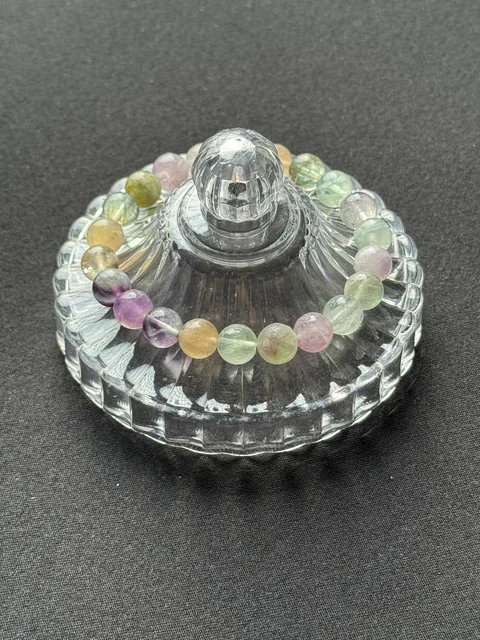 Natural Multicolor Feather Fluorite Bracelet
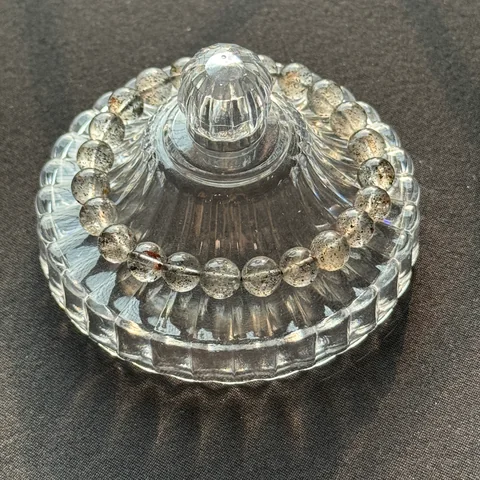 Mica Super Seven Crystal Bracelet
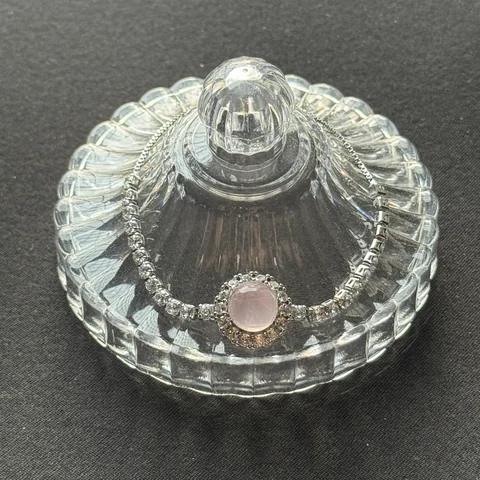 Rose Quartz Full-Pavé Adjustable Bracelet
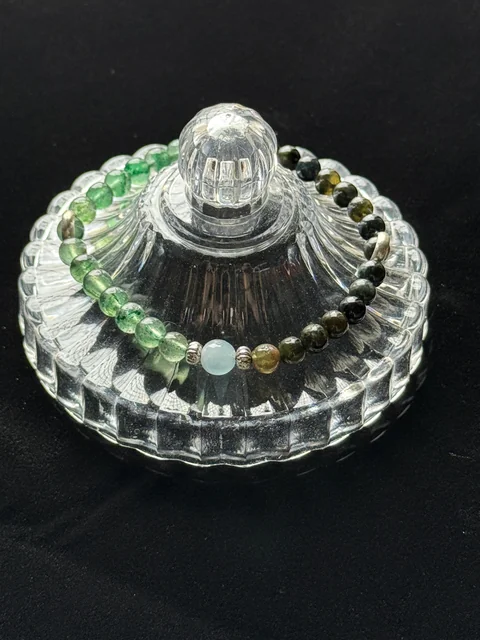 Natural Multicolor Tourmaline Bracelet
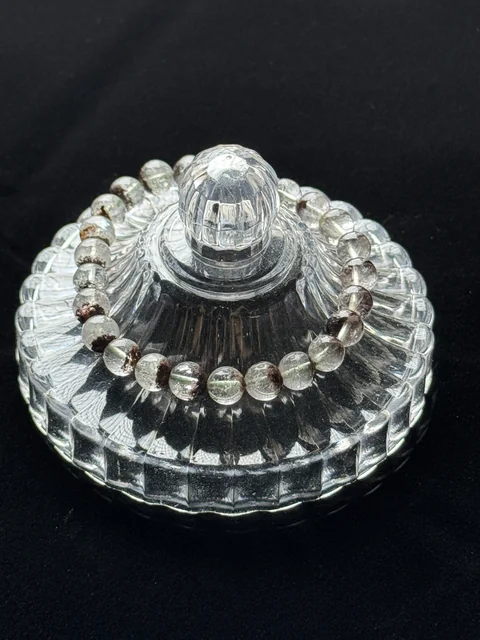 Natural White Phantom Quartz Bracelet
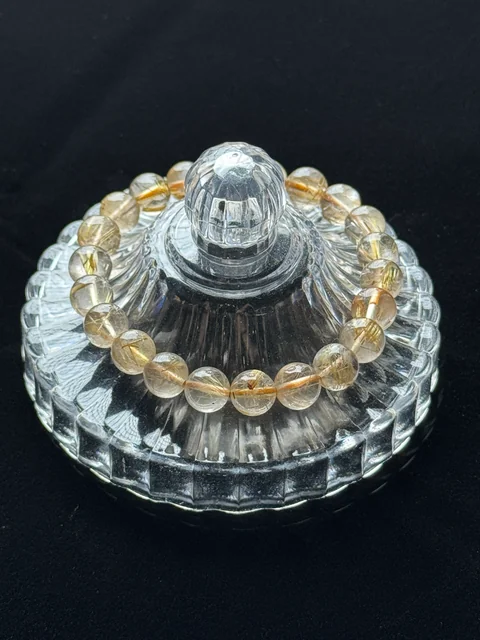 Golden Silk Glow Rutilated Quartz Bracelet