The "Super Seven" Myth: Why Your Most Expensive Crystal Might Be a Fragile Flaw
Edison Cheng
Diploma in Crystal Identification, Gemmological Institute, China University of Geosciences
Published 9 September 2026
Walk into any high-end gem show today, and you will see a massive trend. Sellers are crowded around velvet trays. They are showing off a very specific kind of quartz bracelet. Inside the beads, you can see a chaotic world of colorful needles, metallic flakes, and rich purples.
The price tags are shocking. These pieces often cost as much as a fine, faceted gemstone.
Sellers use a legendary name for this stone: Super Seven, the Melody Stone, or Sacred Seven.
The marketing story is everywhere on Instagram and Reddit. They claim a single bead contains seven distinct, powerful minerals. Amethyst, smoky quartz, clear quartz, rutile, goethite, lepidocrocite, and cacoxenite. All packed together by mother nature.
It sounds like an absolute geological miracle.
Many collectors spend their hard-earned savings to own this perfect "seven-in-one" spiritual powerhouse. But if we take that expensive bracelet and look at it under a professional gemological microscope?
The myth usually falls apart in seconds.The truth is quite simple.In the scientific world, even advanced lab equipment rarely finds all seven minerals in one piece.
What is the actual science behind this heavy marketing? How is this stone classified by experts? Let’s skip the spiritual hype and look at the hard facts behind the trend.
1. A Look Through the Microscope: The Real Guest List
First, let's be fair. These crystals are genuinely beautiful.
In gemology, we classify them as included quartz. Quartz grows deep underground over millions of years. During this long growth process, the silicon dioxide often swallows up other minerals growing nearby. This is a very common natural event. It is the exact same family that gives us rutilated quartz and phantom quartz.
However, the name "Super Seven" is purely a clever trade term.
When labs run professional spectroscopic tests on these stones, the results are very consistent. Most beads only contain a couple of common guests:
- The Colorful Needles and Flakes: These are almost always rutile or goethite. They form the metallic hairs and dark sheets inside the stone. They provide most of the beautiful visual drama.
- The Tri-Color Zoning: The purples, grays, and clears are not separate minerals. It is just one piece of quartz that changed colors as it grew due to minor chemical shifts. Gemologists call this color zoning. It looks great, but it is not rare.
| What you see in the bead | What it usually is | What the article says |
|---|---|---|
| The colorful needles and flakes | Rutile or goethite | They form the metallic hairs and dark sheets inside the stone, and provide most of the visual drama |
| The tri-color zoning | One piece of quartz that changed colors as it grew | Gemologists call this color zoning. It looks great, but it is not rare |
| The tiny red glitter flakes | Standard hematite or variations of goethite | The chances of lepidocrocite and cacoxenite growing inside quartz at the same time and place, keeping their distinct structures, are incredibly low |
What about the rest of the famous seven?
Minerals like lepidocrocite and cacoxenite are highly sensitive to their environment. The chances of them growing inside quartz, at the exact same time and place while keeping their distinct structures, are incredibly low. Under laboratory testing, those tiny red glitter flakes usually turn out to be standard hematite or variations of goethite.
You are paying a massive premium for a grand geological miracle. In reality, you are mostly buying a very pretty, heavily included piece of colorful rutilated quartz.
It is a beautiful piece of nature. But the "seven-mineral" guarantee is mostly a romantic story put together using a chemistry checklist.
2. Earth’s Fingerprint vs. The Marketing Label
In the gemstone trade, stories sell much faster than mineralogy. That is just a reality of the market.
This specific material originally came from a single, old mining region. When the original deposit ran thin, sellers used "scarcity marketing" to drive the prices into the thousands.
But if you send your high-priced bracelet to any major, independent gem lab in the world, look closely at the official document. Under the "Species" or "Identification" line, it will say one word: Natural Quartz. The lab might add a brief note: "Quartz with multiple mineral inclusions."
A serious, professional gem lab will never write the words "Super Seven" on an official certificate.
This is where many new buyers get stuck. They buy a piece online believing the "seven-in-one" claim. Later, they try to get a formal appraisal, only to find out that the gem world does not recognize "Super Seven" as a real mineral species. You are paying for the spiritual branding, not a rare scientific discovery.
There is no need to hate these stones. Inclusions are like the ancient fingerprints of our planet. They capture a moment from millions of years ago. If you love the look of the chaotic patterns, it is a magnificent piece of natural art. But if you are buying it just to collect all seven names, your collection strategy might be starting on the wrong foot.
3. The Unspoken Danger: A Recipe for Hidden Fractures
Beyond the naming tricks, heavily included quartz has a serious physical weakness that sellers rarely mention. It is incredibly fragile.
We often say that pure, clean quartz is tough. It has a Mohs hardness of 7 and handles daily wear with ease. But quartz packed with metal needles and flakes behaves entirely differently.
This vulnerability comes down to basic engineering.
When a crystal is stuffed with hard pieces of rutile or brittle iron oxides like goethite, the metal and the quartz do not blend seamlessly. They are two completely different materials fused together. When the stone takes an impact, the shockwaves travel through the quartz and the metal at different speeds.
In gemology, this creates thousands of microscopic stress points.
This is where things get tricky in real life.If you wear your bracelet every day, the beads will bump together. You might accidentally tap your wrist against a granite kitchen counter or a wooden desk. If that minor impact happens to hit a spot where a metal needle meets the quartz, the stone can instantly pop open along that internal boundary.
It might not shatter into pieces right away. Instead, you will suddenly see new, internal white cracks appearing inside your beads. The clear areas will start to look foggy or cloudy. This is permanent, irreversible physical damage.
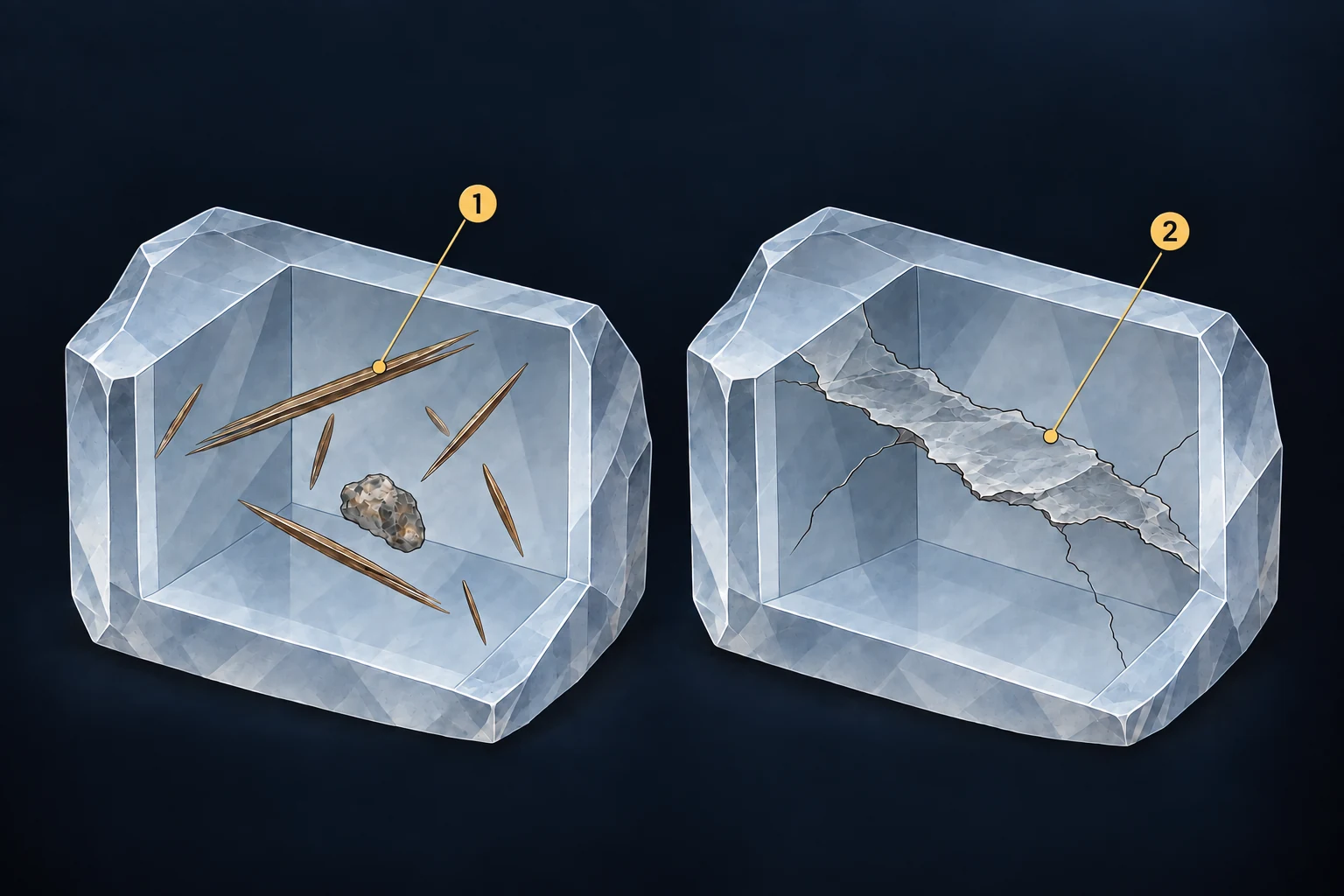
- 1Mineral inclusions
- Other minerals embedded in quartz are not, by themselves, an existing fracture.
- 2A fracture
- Pay attention to the position and extent of the fracture inside the quartz.
4. True Value Starts with Science, Not Hype
Collecting minerals is a deeply rewarding hobby, but the best choices are always built on solid ground.
The modern market is flooded with fancy names and artificial scarcity. It is very easy to overpay for a good story. But remember, the flaws and inclusions given by nature are beautiful enough on their own. They do not need an exaggerated marketing script to be valuable.
When you look past the fancy trade names and stop playing the numbers game, you can finally appreciate the real beauty of the stone. You can focus on how the light plays off the natural needles and how the internal colors shift. True appreciation starts with physics, not folklore.
We love diving into the real facts behind trending gemstones, and we will keep breaking down the science of your favorite minerals in our upcoming articles. When you shop with open, educated eyes, the hobby becomes a whole lot more fun.
Industry References for Material Stability
To verify the physical properties and standard terminology of included minerals, consult the official literature from these leading international bodies:
- GIA (Gemological Institute of America) – Gem Encyclopedia: Included Quartz Quality Factors
The definitive educational guide on how quartz traps foreign minerals during growth, and the official laboratory guidelines for naming included stones. - GIC (Gemmological Institute of China) – Gemology Textbook: Inclusions and Internal Structures
An academic analysis of how foreign mineral inclusions create localized stress points inside a host crystal, affecting its physical toughness. - Mindat.org – Rutile and Goethite Species Stability Database
The world's largest public earth science database, providing peer-reviewed crystal data on the co-crystallization limits of quartz and iron oxides.
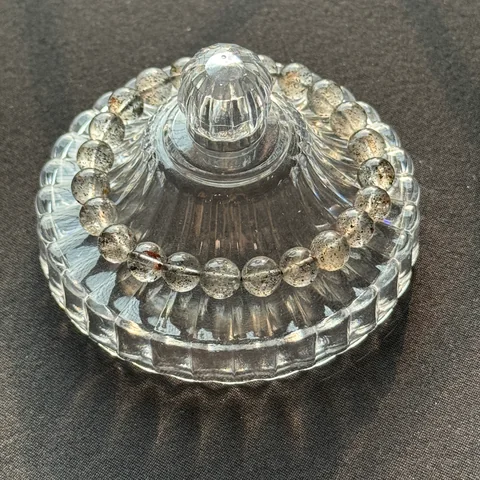 Mica Super Seven Crystal Bracelet